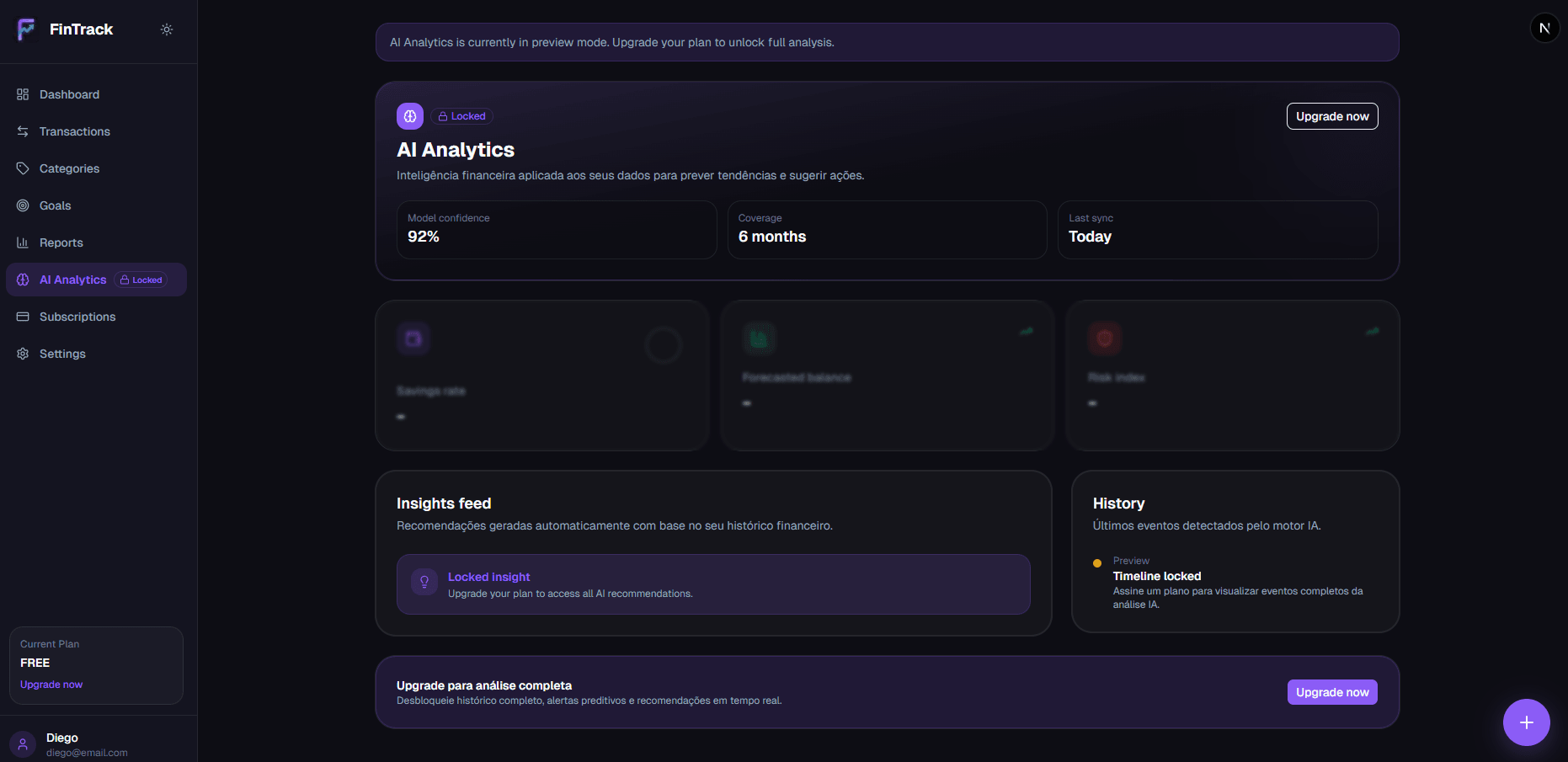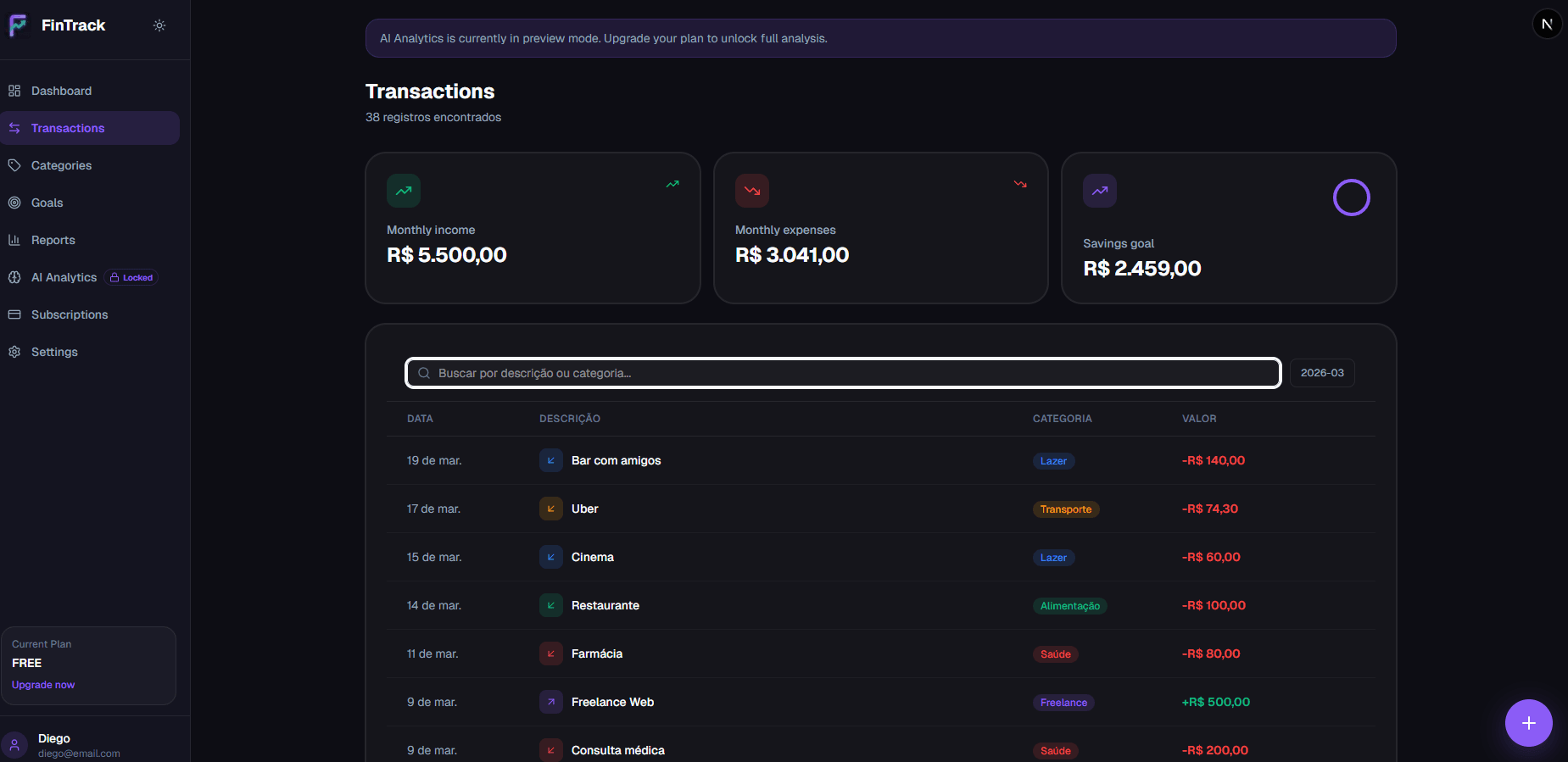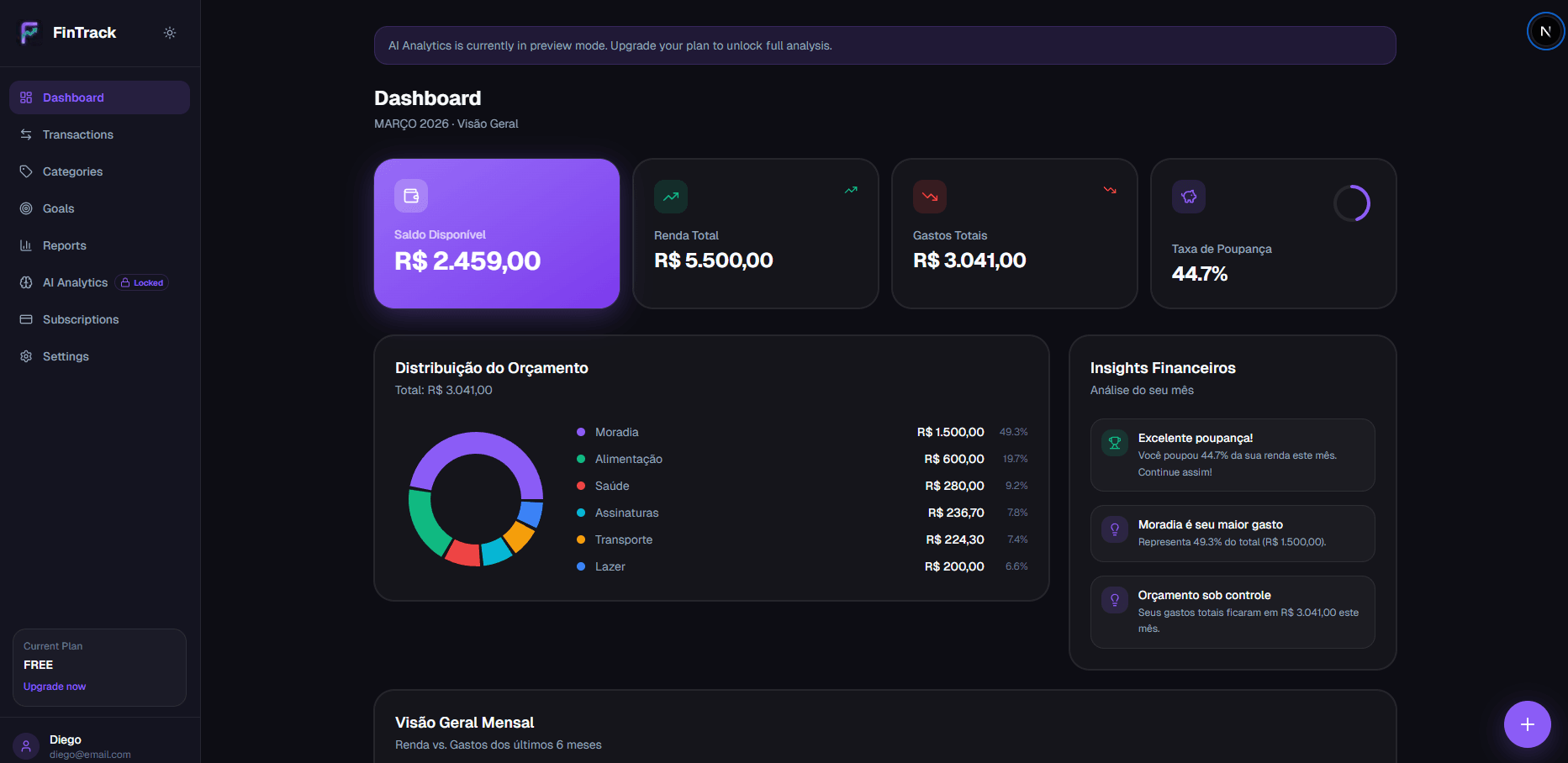
Fintrack is a personal finance platform designed to help users understand and analyze their spending patterns through a fast, mobile-first experience.
The application focuses on simplicity and clarity in financial data visualization while preparing the foundation for AI-assisted insights. Users can track income and expenses, categorize transactions, view financial summaries, and eventually generate intelligent analyses based on aggregated financial metrics.
The project emphasizes a clean architecture with a dedicated backend, strong typing, and a clear separation between deterministic financial calculations and AI interpretation. This ensures reliability in financial metrics while allowing AI to provide meaningful summaries and suggestions.
Fintrack is being developed with scalability and product evolution in mind, starting as a structured portfolio project and gradually evolving toward a potential SaaS platform.
Problem
Modern personal finance tools often overwhelm users with complex dashboards or require extensive manual input before providing any meaningful insight.
The challenge of Fintrack is to create a fast and intuitive financial tracking experience that works seamlessly on mobile devices while still offering deeper analysis capabilities.
The project aims to reduce friction in daily financial tracking while building a foundation for automated insights based on real spending behavior.
Architecture
Fintrack follows a full-stack architecture designed for long-term scalability and clear domain separation.
The frontend is built with Next.js and a structured workspace layout that separates UI primitives, visual patterns, and domain components. State synchronization and data fetching are handled using TanStack Query to keep the interface responsive and efficient.
The backend is implemented with Fastify, Drizzle ORM, and PostgreSQL, exposing a REST API responsible for financial data management, analytics processing, and AI input preparation.
This separation ensures that financial calculations remain deterministic and reliable, while AI systems operate only as an interpretation layer.
Implementation
The project currently includes the foundation for transaction management, category organization, and financial data visualization through charts and summaries.
The interface is designed with a mobile-first approach, prioritizing performance, clarity, and fast interaction for day-to-day use.
The backend architecture introduces structured services for financial analytics and prepares the integration layer for AI-generated spending insights. Subscription management and premium features are also planned through Stripe integration, enabling future SaaS capabilities.
Impact
Fintrack establishes a scalable baseline for building intelligent financial tools.
By separating deterministic financial logic from AI interpretation and adopting a modular full-stack architecture, the project creates a stable foundation for future features such as automated spending analysis, CSV bank import, and subscription-based premium insights.
The architecture also supports rapid iteration while maintaining long-term maintainability and performance.