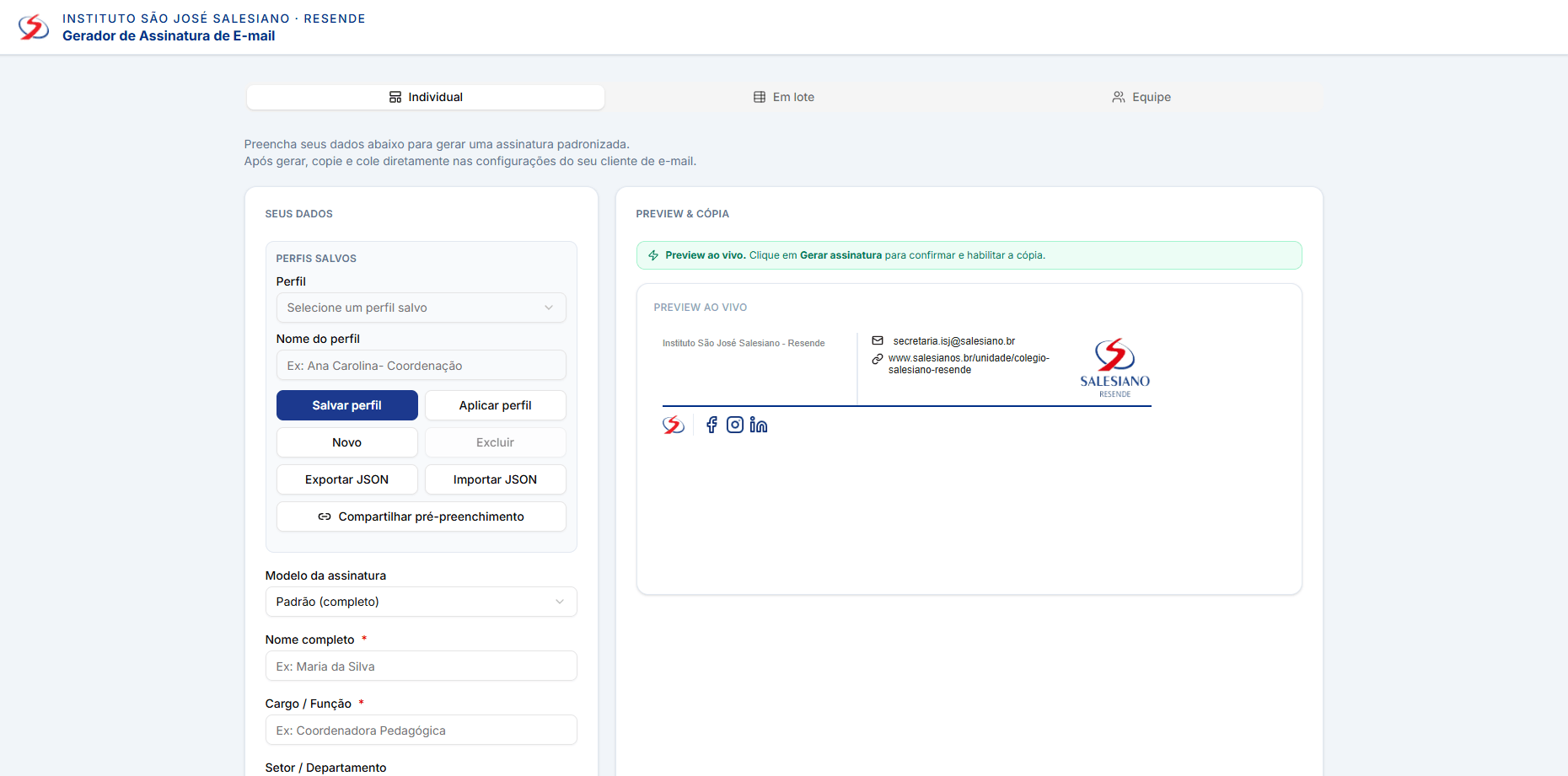
Signature Builderis a client-side web application originally built to solve a real-world need for standardized institutional email signatures within an educational organization.
The project was developed using Next.js (App Router) with TypeScript, focusing on generating safe, compatible HTML signatures suitable for email clients such as Gmail and Outlook.
The application provides:
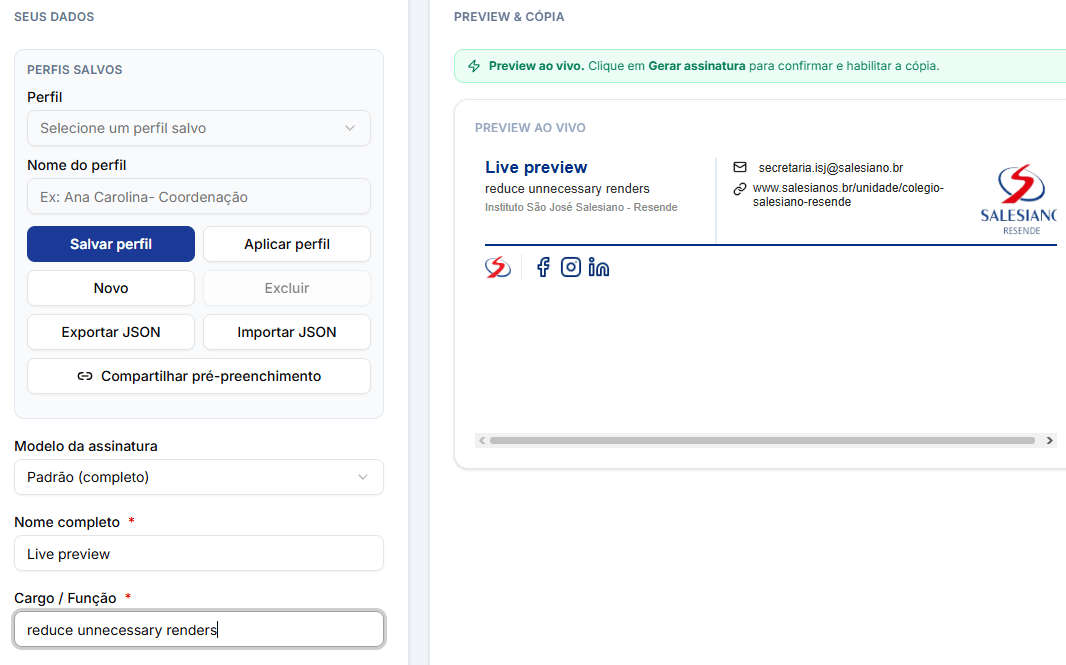
Form-based data input (name, role, contact, department, social links)
Real-time signature preview rendered inside an isolated iframe
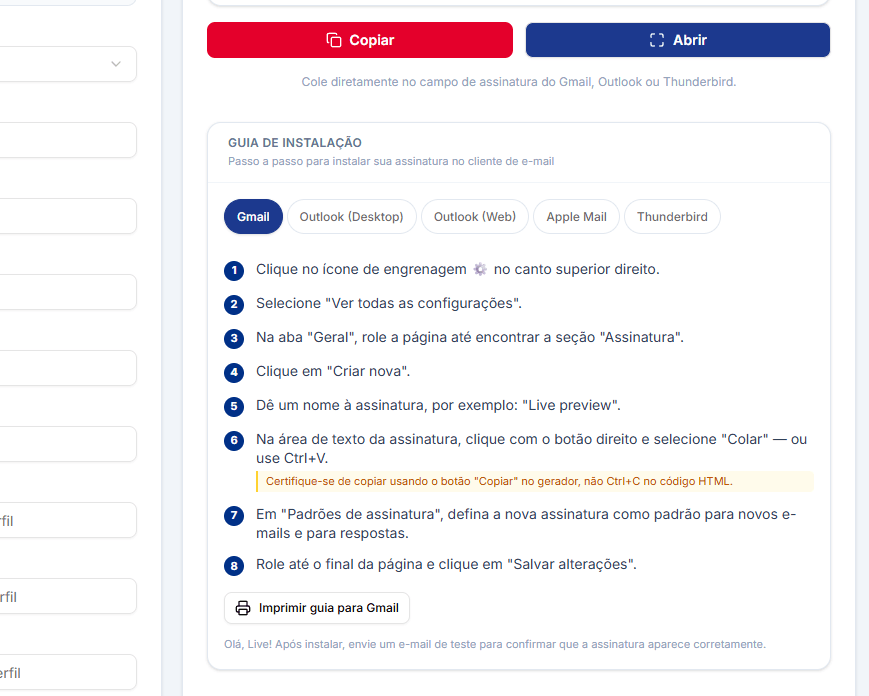
Copy-as-HTML functionality using the Clipboard API
Local profile persistence using localStorage
Import/export of profiles using JSZip
Architecturally, the project follows a feature-based organization, separating signature logic from shared UI components. Styling is implemented with Tailwind CSS, supported by shadcn/ui primitives and Radix for accessible components.
Technical decisions prioritized:
Table-based layout and inline styles for maximum email client compatibility
Debounced preview updates to reduce unnecessary renders
Client-first architecture to keep deployment simple and performant
Strong TypeScript typing for maintainability
The result is a lightweight, production-ready MVP that solves a real institutional need while maintaining clean architecture and extensibility.
Overview
Signature Builder was created to standardize institutional email signatures and remove repetitive manual formatting work.
The product focuses on reliable HTML output and a simple workflow that non-technical teams can use daily.
Architecture
The app uses Next.js App Router with a feature-oriented structure that separates signature logic from shared UI primitives.
Core capabilities are organized around form input, preview rendering, and export/persistence utilities for maintainable evolution.
Technical Decisions
Implementation prioritized email-client compatibility through conservative HTML and inline styles, plus real-time preview with debounced updates.
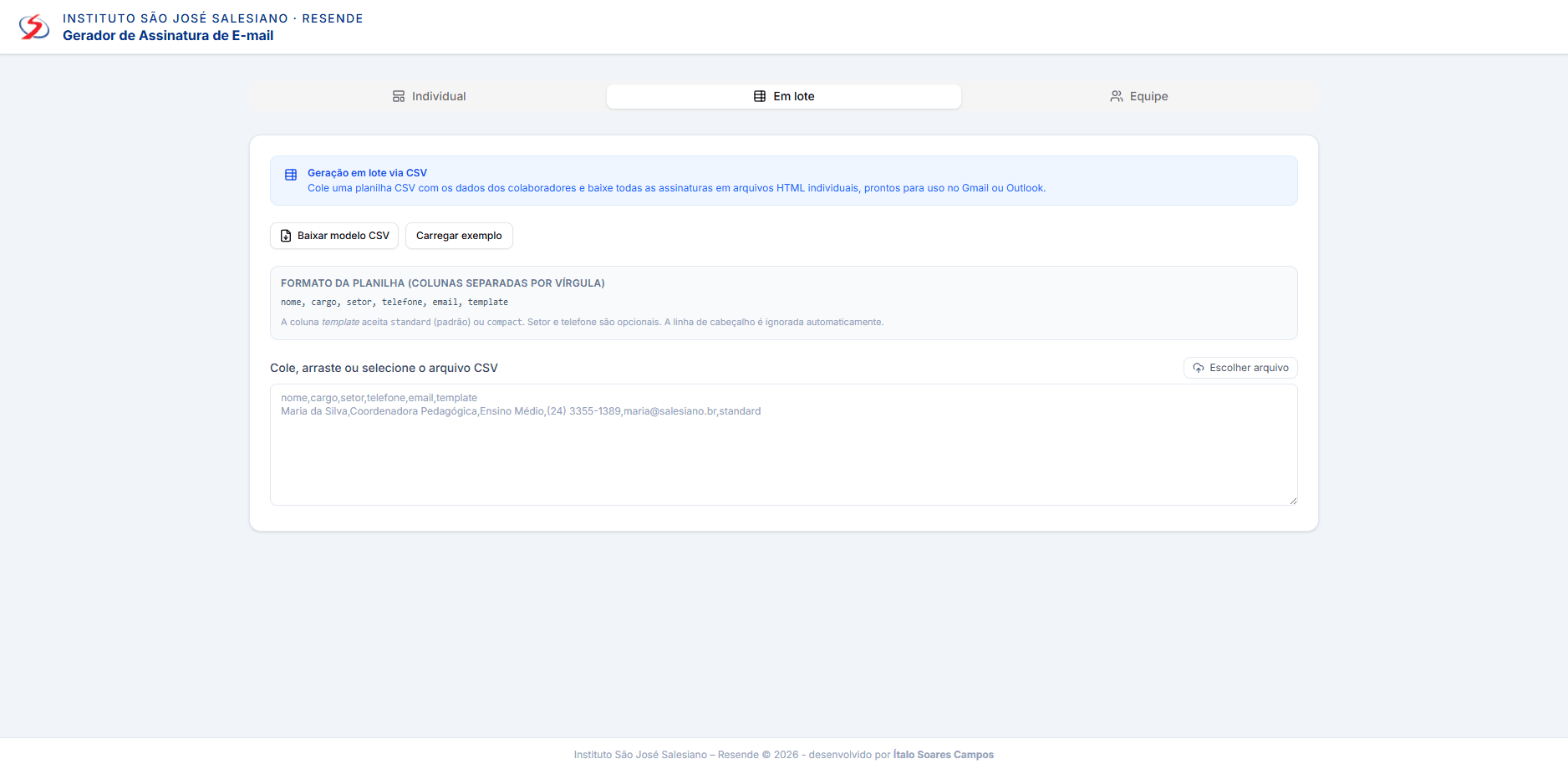
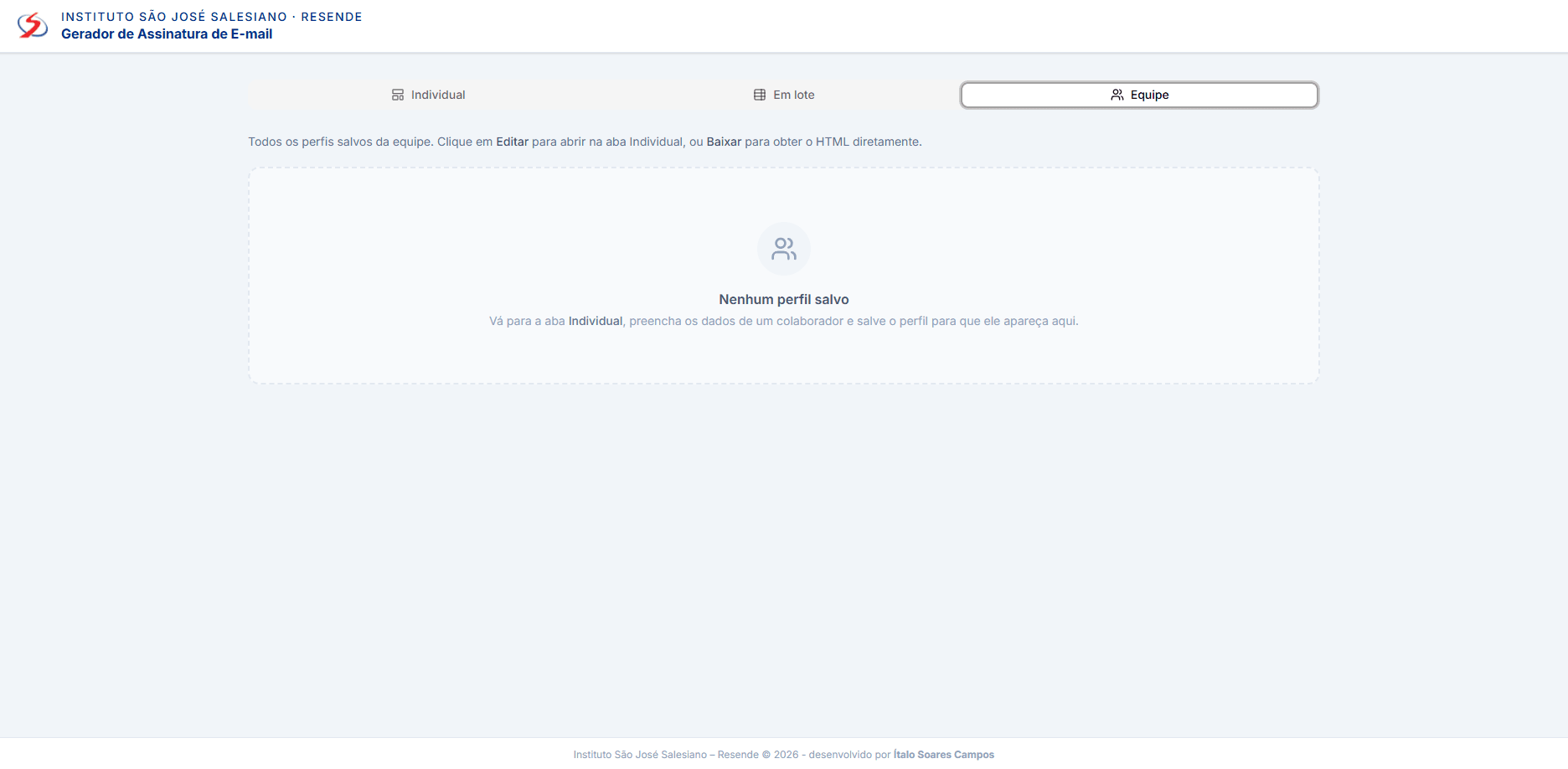
Team/profile loading, batch export workflows, and CSV-driven operations were added to support institutional scale.
Performance & UX
Preview rendering is isolated to avoid style leakage and keep output predictable across environments.
Client-side persistence and fast interaction loops improve perceived performance and reduce operational friction.
Challenges
Main challenges included cross-client rendering constraints in Gmail/Outlook and safe HTML copy behavior across browsers.
These constraints were handled with robust templates, fallback behavior, and iterative UI refinements.
Outcome
The result is a production-ready signature workflow that improves consistency, reduces manual effort, and scales better across teams.
The architecture remains extensible for future branding variants and organization-specific templates.