A workflow, not another generation button
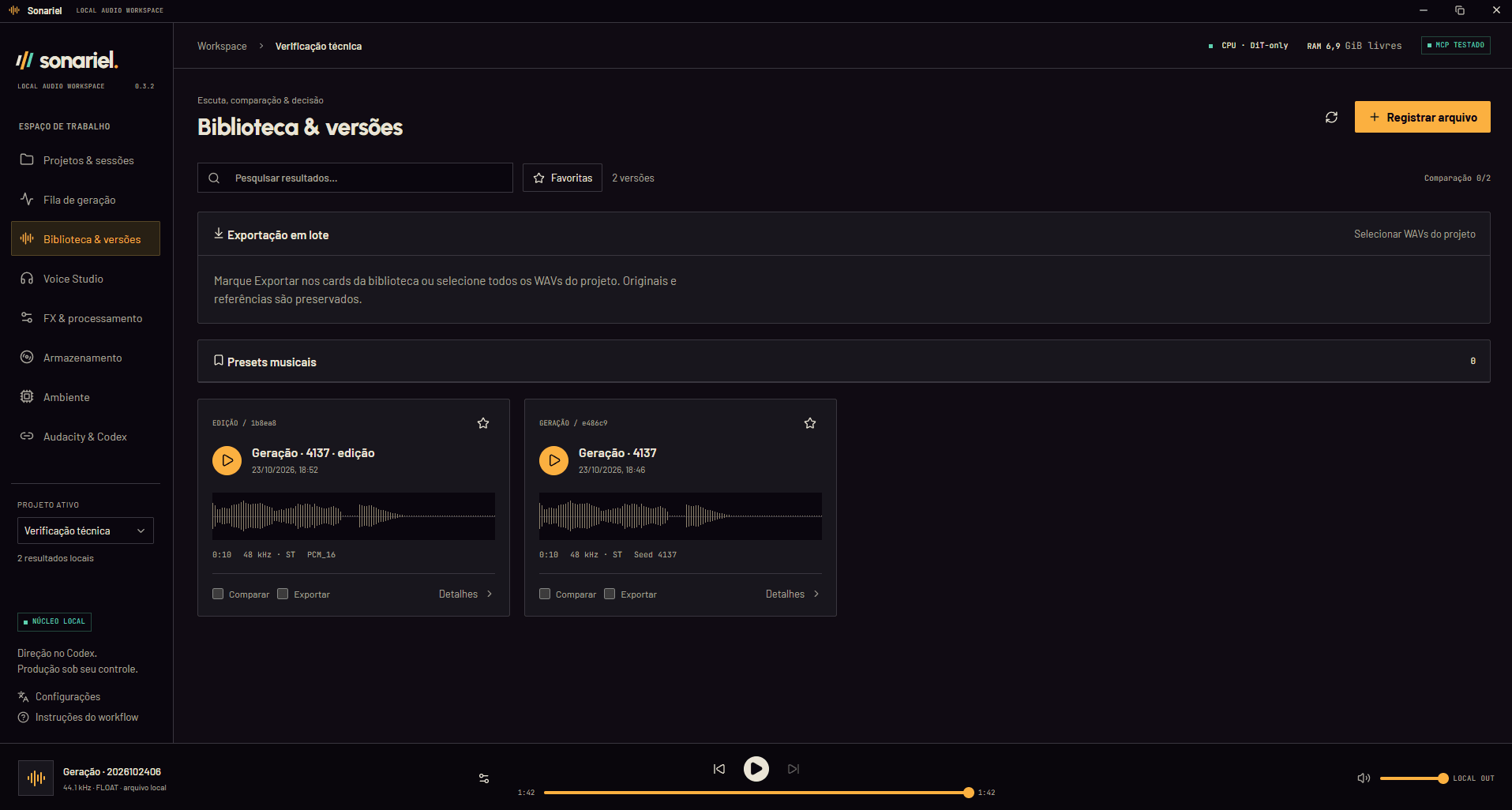
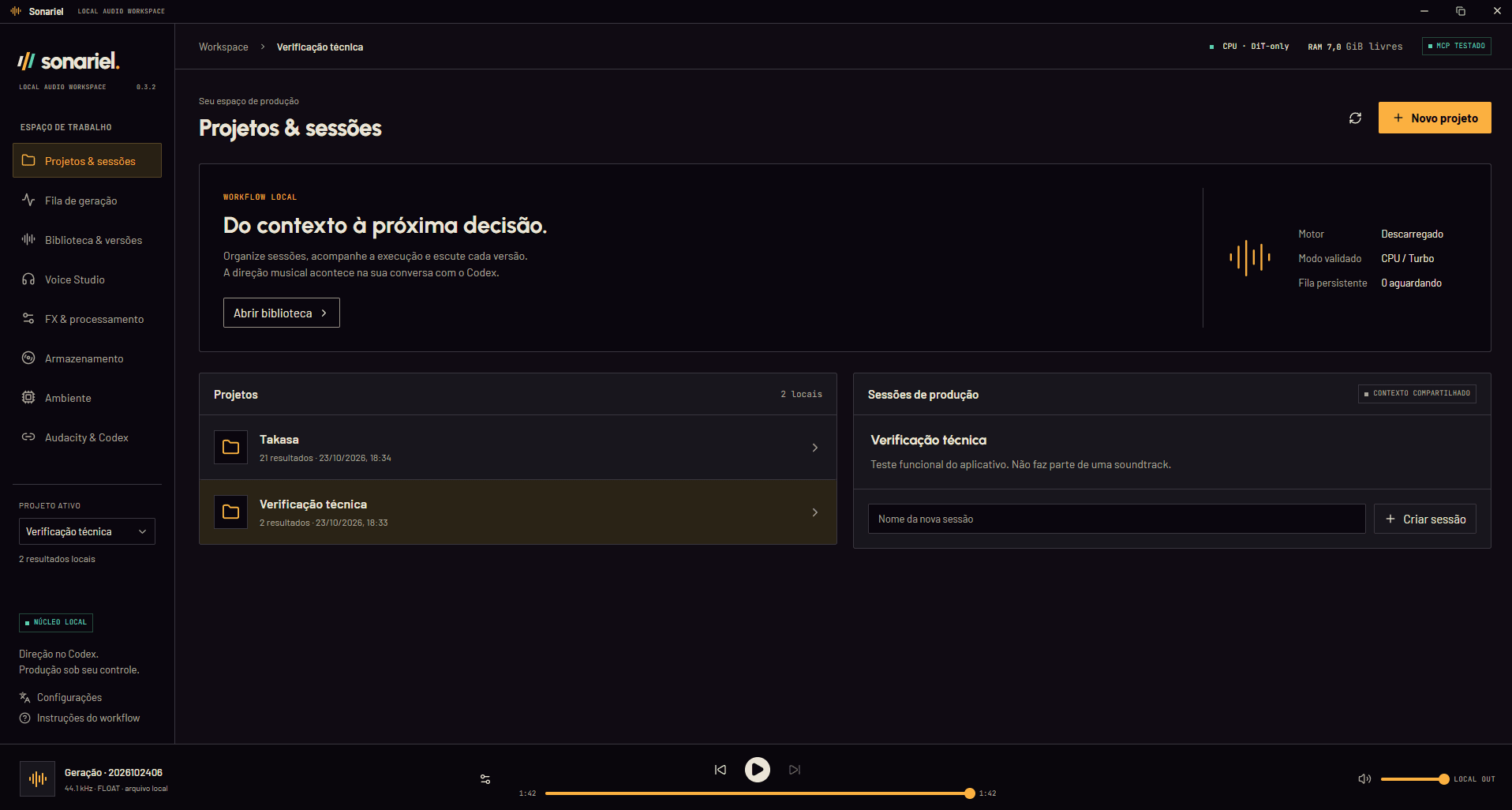
An audio result is only one step in a creative workflow. The source, settings, comparison and next decision need to stay connected. I built Sonariel around projects and versions so that local generation and processing do not become a folder of unrelated WAV files.
The desktop is where you listen, compare and organize. A connected agent handles the creative conversation through MCP. Sonariel executes bounded operations and records their results; it does not contain a separate autonomous chat agent.
One state, two clients
The React and Tauri desktop and the MCP bridge share a lightweight Python core and SQLite state. Both clients see the same projects, jobs, versions and selection.
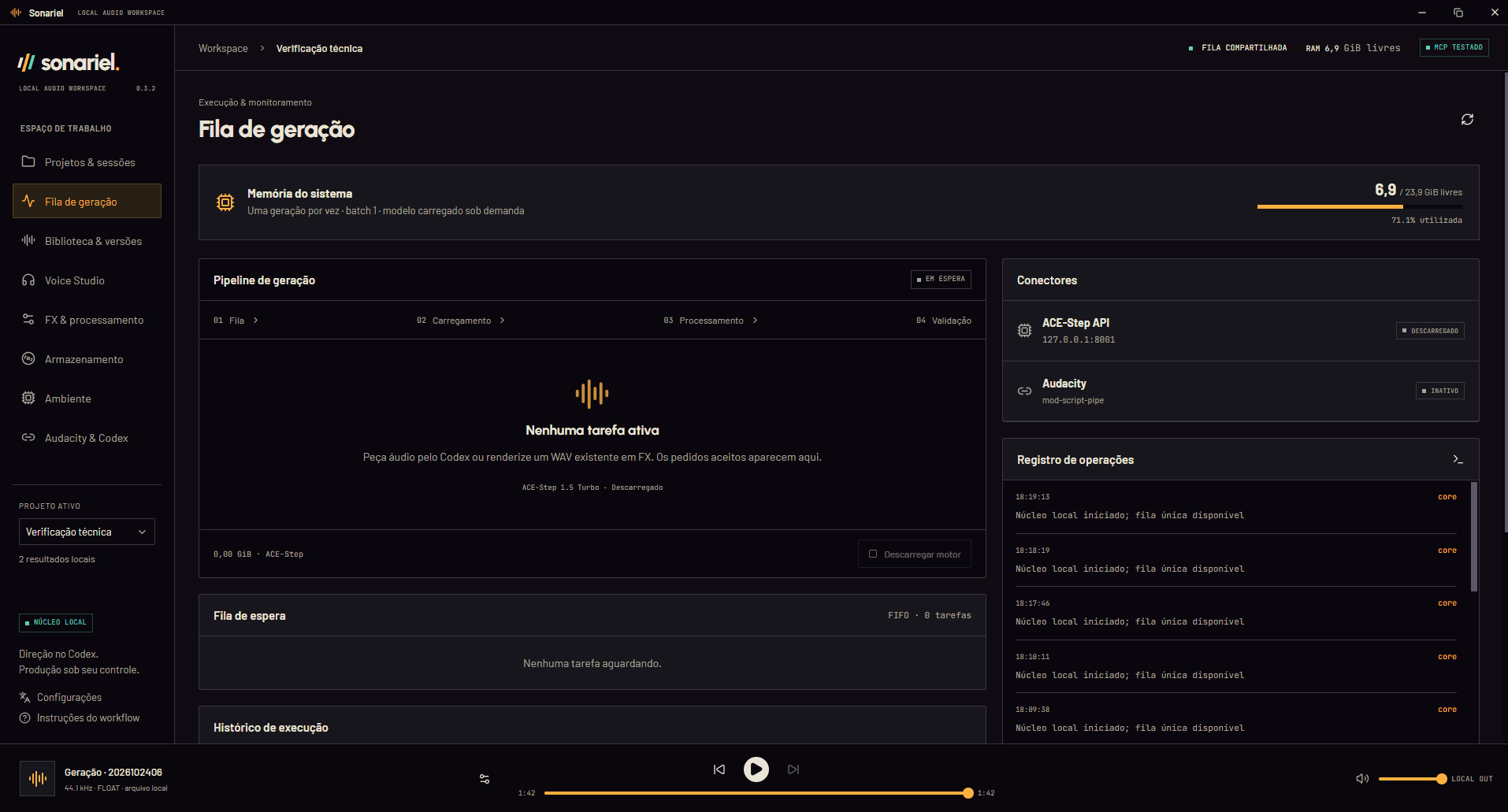
Keeping one persistent queue avoids having the interface and agent disagree about what is running. Request keys prevent duplicate submissions. Accepted work has a persistent job ID, so recovering a client means checking the existing job rather than silently generating again.
Keeping heavy work out of the interface
Music and speech engines run in separate, isolated environments. The lightweight core does not import the inference stack. A worker admits one task at a time after checking available memory.
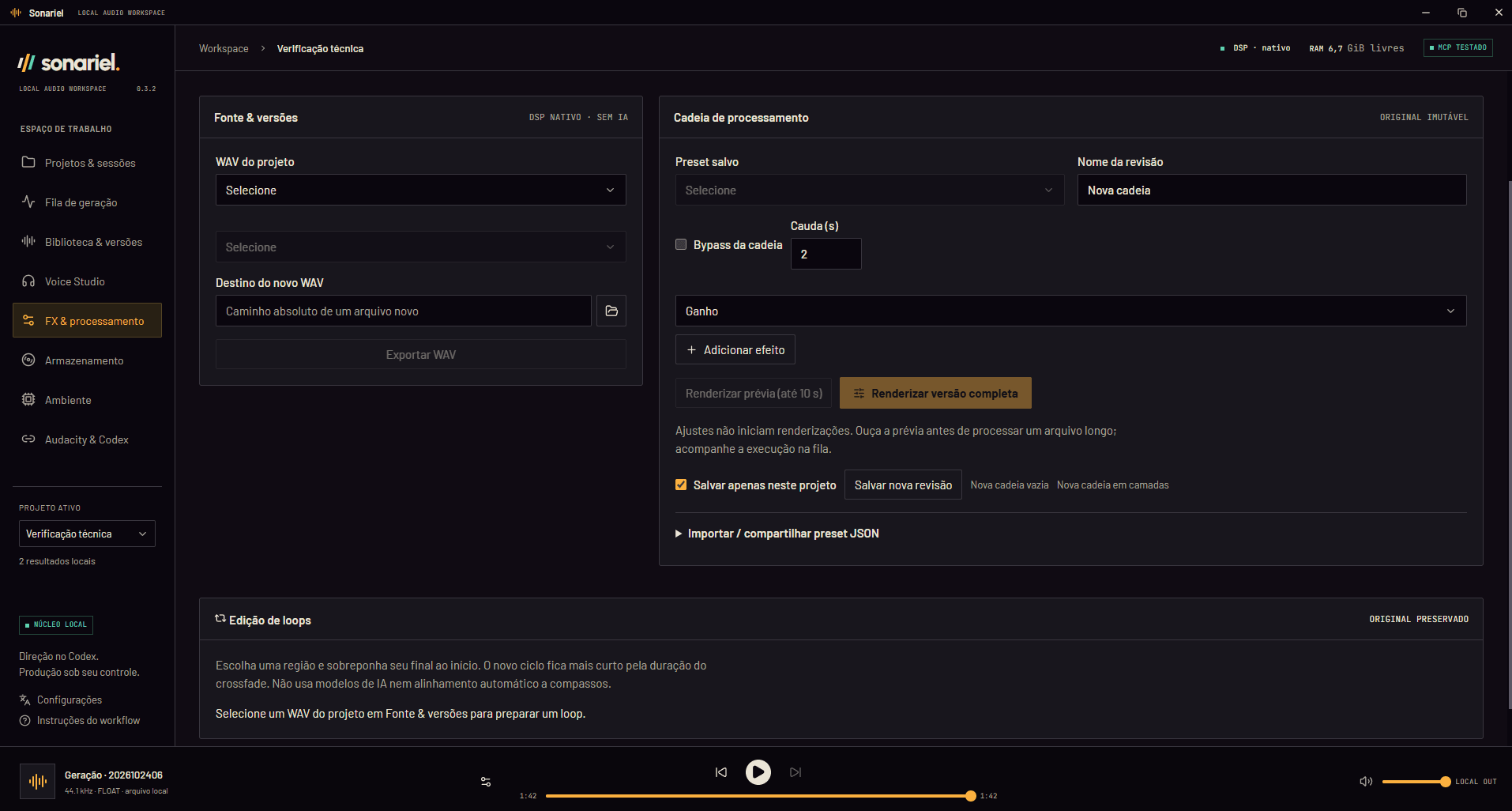
That boundary matters on a CPU-focused Windows application: opening the workspace should not load a large model. Native Rust/C++ DSP is separate from the generative runtimes, so importing audio and applying effects does not require a music model.
Preserving the source
Effects produce new WAV versions with source relationships instead of overwriting the original. The interface keeps playback, comparison and lineage close to each other.
The storage workflow protects referenced files and offers recoverable discard. It deliberately does not pretend that moving something to recoverable storage frees disk space.
Making the workflow understandable
I used a shared visual system, locally bundled typography, restrained status colors and a persistent player. Setup and first-use guidance explain actual operations, including which steps require a model or a connected agent.
Delivery and boundaries
Sonariel is distributed for Windows, with optional signed-updater packages and explicit installation. The installer itself is not Authenticode-signed. Its source is available under a custom license, not an OSI-approved open-source license.
The result is a usable local audio workflow connecting execution, inspection and creative decisions. Current supported capabilities and hardware limits remain documented in the repository rather than implied by the portfolio.