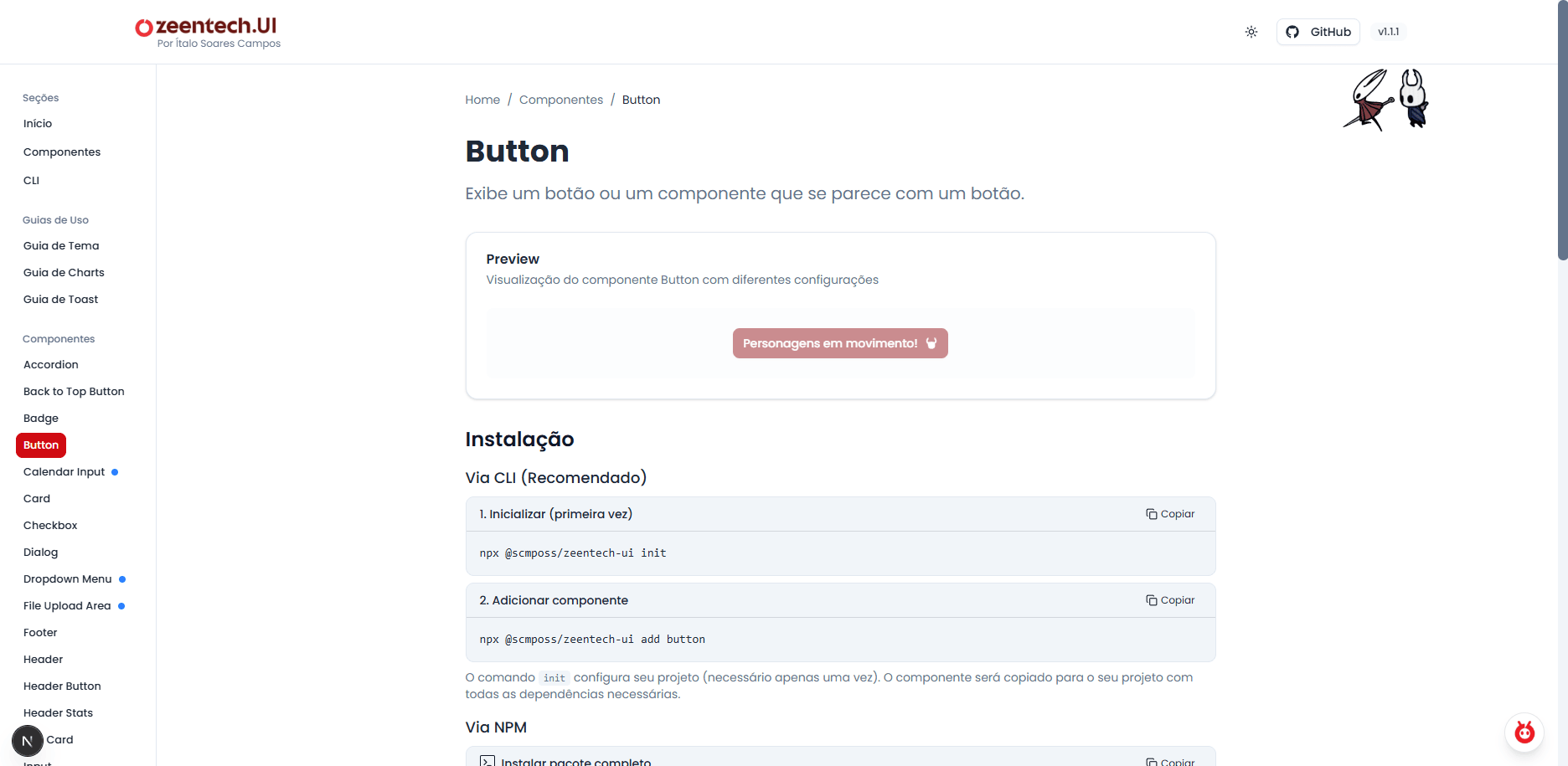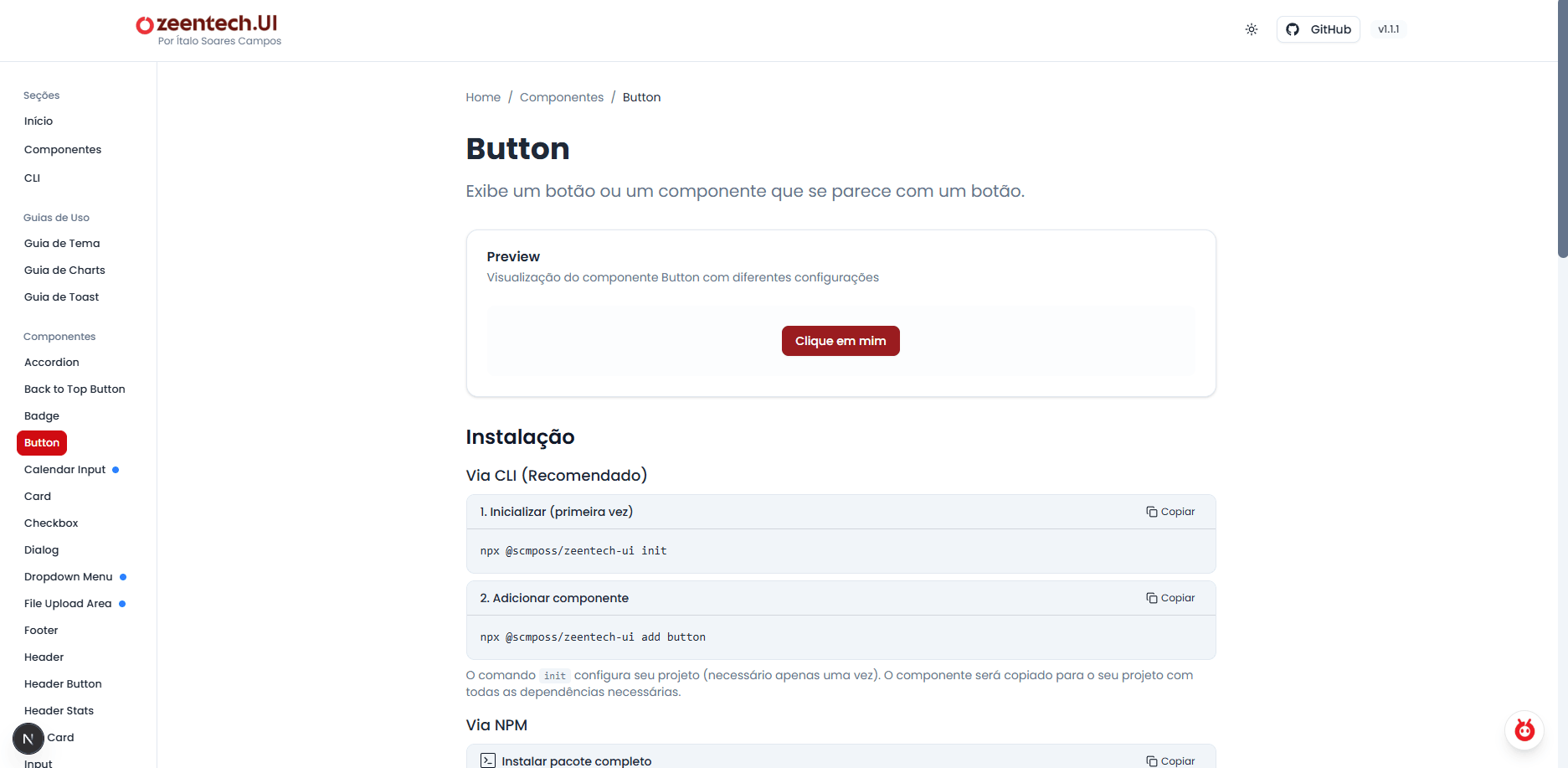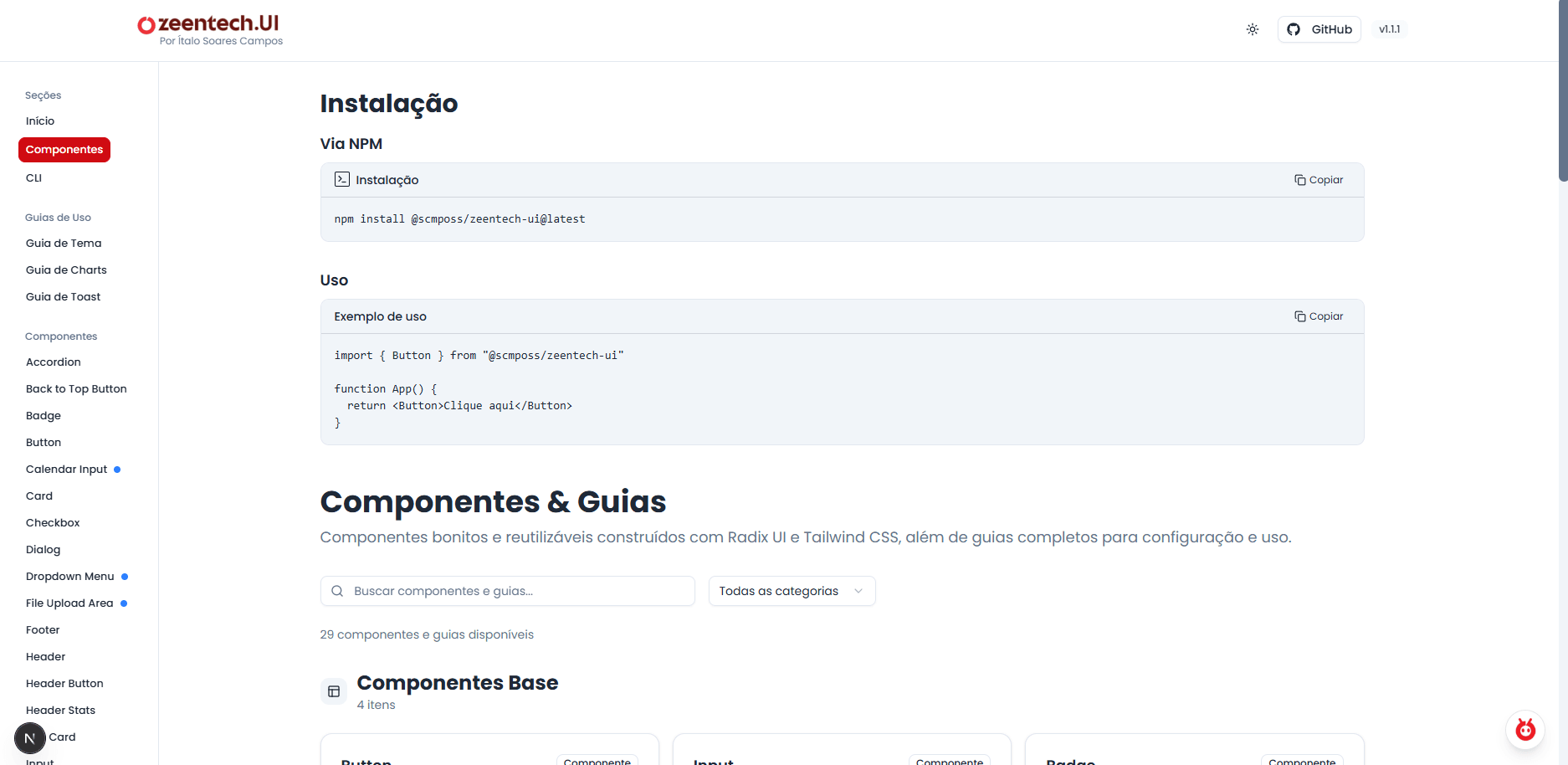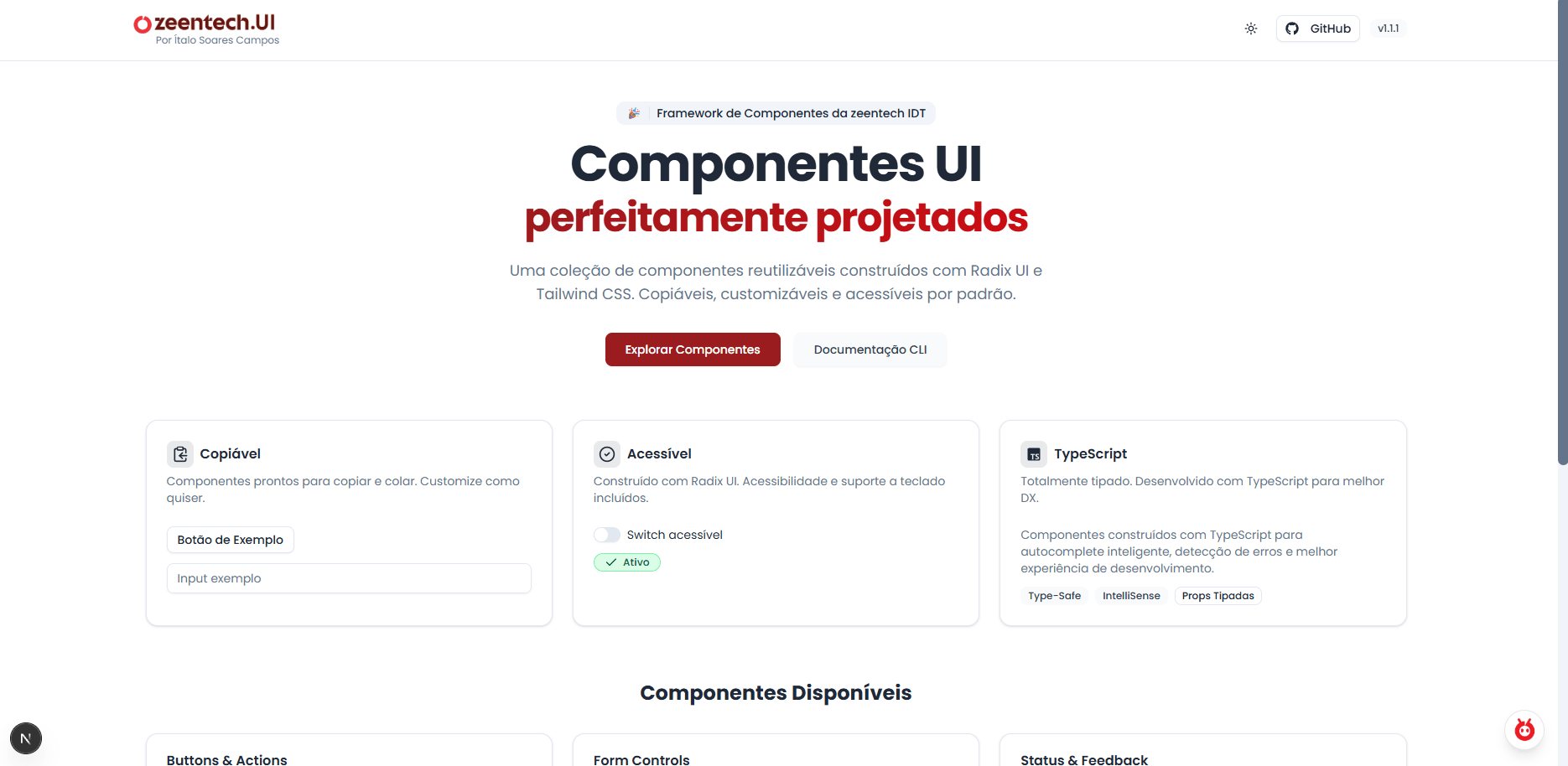
zeentechUI is a reusable UI component framework designed to standardize interface development and accelerate product delivery.
Built with React, TypeScript, Tailwind CSS and Radix UI, the framework provides accessible, themeable components that can be consumed either through a CLI-based copy strategy or as an installable npm package.
The project focused on creating a flexible component architecture, improving developer experience, and enabling faster feature iteration through reusable UI foundations.
Role
Designed and implemented a reusable UI component framework aimed at improving frontend development speed and consistency. Responsible for component architecture, theming strategy, documentation structure, and distribution through both CLI tooling and npm packaging.
Engineering Challenges
Addressed the challenge of creating reusable UI primitives that could remain flexible across multiple projects while maintaining accessibility, type safety, and consistent styling. Balanced component abstraction with developer control by enabling both package consumption and copy-based integration through a CLI workflow.
Technical Contributions
Built a scalable component registry using React and TypeScript, with Tailwind CSS for styling and Radix UI primitives for accessibility. Implemented reusable UI patterns, theming support (light, dark, and contrast modes), and a CLI distribution workflow that allows teams to copy components directly into their projects for full customization. Also structured the project for npm distribution, enabling both package-based and source-level usage patterns.
Technologies Used
Built with Next.js (React + TypeScript) for development and documentation, Tailwind CSS for styling, and Radix UI primitives for accessible component behavior.
Developer Experience Improvements
Improved developer productivity by providing copy-ready components, consistent styling patterns, and fully typed APIs. The CLI workflow reduced setup friction while allowing teams to maintain full control over component source code. The design system approach also reduced duplicated UI work across projects.
General Impact
Enabled faster UI development through reusable component patterns while maintaining flexibility for customization. The framework improved consistency across interfaces and provided a scalable foundation for future product development.